
Get Healthy!
- Posted February 3, 2026
Stroke Rehab Focused On 'Good' Arm Shows Better Results, Trial Finds
Stroke rehabilitation might be focusing on the wrong side of a survivor’s body, a new study says.
Traditional rehab focuses on restoring strength and movement to the side of the body impaired by a stroke, researchers said.
But therapy targeted toward a stroke survivor’s less-impaired arm significantly improved their movement and control, according to clinical trial results published Feb. 2 in JAMA Neurology.
“When we train the less-impaired arm, the individuals got better,” lead researcher Candice Maenza said in a news release. She’s project manager for the Neurorehabilitation Research Laboratory at the Penn State College of Medicine.
“This could improve quality of life and reduce the burden of care for caregivers because stroke survivors with severe paralysis on one side rely on this arm for daily tasks like eating or dressing,” Maenza said.
A stroke can damage parts of the brain that control movement, often causing paralysis or weakness on one side of a person’s body, researchers said in background notes.
Traditional rehabilitation focuses on the more impaired side of the body because the lack of function there is obvious, but the other side might also lose significant function, researchers said.
“You’re already doing things mostly with one hand and that’s really hard in itself,” senior researcher Robert Sainburg, chair of kinesiology and neurology at Penn State, said in a news release.
“Now, the effect of the stroke on the less-impaired arm has added an additional deficit on top of that, say a 10-to-25% loss of motor coordination in the hand that has the most function,” Sainburg said. “That’s a big deal in terms of what tasks you can perform for yourself and what tasks require assistance.”
For the new study, researchers randomly assigned a small group of stroke patients to two different treatments, with 25 focusing on improving their less-impaired arm and 28 their more-impaired arm.
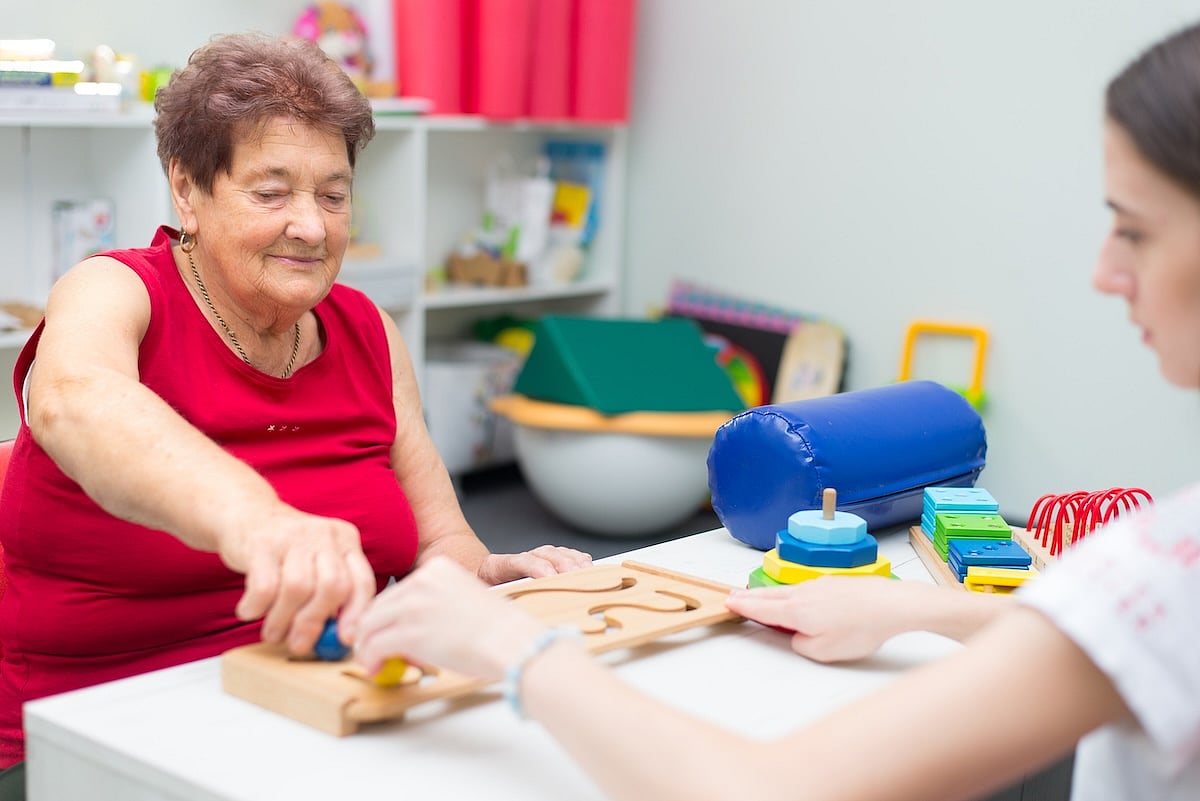
Both groups underwent 15 physical therapy sessions over five weeks. For the “good” arm group, therapy included activities like a virtual reality shuffleboard-like game or tracing games followed by challenging real-life dexterity training.
“What we're doing is remediation that was never done before,” Sainburg said. “We're changing the function of the less-impaired hand so that their activities of daily living can be more efficient.”
The “bad” arm group received standard therapy focusing on their more impaired arm.
By the end, those who received therapy focused on their less-impaired arm completed a standard dexterity test -- picking up small objects, flipping cards -- about six seconds faster than when they started, representing a 12% improvement, researchers said.
“Stroke patients might have been able to do things like fasten a button, but it took so much time to do it that it wasn't worth it to do it independently. By getting a little bit faster, it makes them want to try to do it by themselves,” Maenza said. “This can be life-changing not just for the patient but also for their spouse or caregiver because the burden of care is reduced.”
These improvements lasted for at least six months after the therapy ended, according to the study.
“The targeted intervention puts patients on what therapists call a virtuous cycle,” Sainburg said. “Once you get a little bit of function, you use it and things continue to improve.”
Researchers next plan to look into how this type of targeted training could be combined with existing therapies and rehab protocols.
More information
The American Stroke Association has more on rehabilitation.
SOURCE: Penn State, news release, Feb. 2, 2026
